Blog
Byte-sized AI: Standing-on-towel
I’m back for another Byte-sized AI issue, and as promised here are my three things: 😁
- Something that you can do to improve how you work
- Something techy from the news
- Something that made me laugh
📰 The one item of news:
CyberScotland Week
Last week saw the return of CyberScotland Week, and with it comes a stat that made me pause: human error is still the single biggest cause of data breaches in UK businesses. Not some terrifying AI-powered super-hack. Not a shadowy collective of geniuses in a basement. Just… people. Clicking things they shouldn’t click, reusing the same password they’ve had since 2014 (I’m looking at myself here too, by the way – I was absolutely guilty of this until embarrassingly recently).
But here’s the bit that’s actually changed – and it’s worth paying attention to. The phishing emails have got good. Like, properly good. The days of spotting a dodgy email because it read like it had been through Google Translate four times are basically over. AI-generated phishing is personalised, well-timed, and written in perfectly normal English. Your team can’t just “use common sense” any more, because common sense was built for emails that looked obviously wrong.
So what do you actually do about it? A few things, and none of them are expensive or complicated (which is the point – the best security measures for SMEs are the boring ones that actually get done).
Turn on multi-factor authentication for everything. Especially email. I know, I know – everyone says this. They say it because it works. Have short, regular chats with your team about what real phishing attempts look like – not annual training that everyone sleepwalks through, but ten minutes with a real example someone actually received. And adopt what I call the “pick up the phone” rule: if an email asks you to transfer money or change bank details, call the person and check. It costs nothing and it prevents the kind of attack that actually ruins people’s week.
AI has raised the bar on the attack side. It’s worth making sure your defences aren’t still stuck in 2019.
😂 The one thing that made me laugh:
Standing-on-towel
My wife asked me the other day if the “standing-on-towel” needed washing. She meant the shower mat. But honestly, “standing-on-towel” is a perfectly accurate description and I’m now slightly annoyed we don’t all call it that.
We’ve all done it though, haven’t we? You forget the word for something and your brain just panics and describes the function instead. “The hot bread machine” (toaster). Pointing at something and saying “that… you know… the thing” whilst everyone around you nods supportively.
Apparently, in German the word for gloves is Handschuhe – literally “hand shoes.” So maybe this is just what language is and the Germans were brave enough to commit to it.
💡 The one thing you can do next week:
Authenticator
Right – given everything I’ve just banged on about in the news section, here’s one thing you can actually do this week that’ll make a genuine difference – setting up an authenticator app.
“Authenticator” is a word that tries very hard to sound more complicated than the thing it describes. But here’s the secret: you’re almost certainly already using the same idea. If your banking app asks you to approve a login on your phone, that’s it. That’s the whole concept. An authenticator app (Microsoft Authenticator and Google Authenticator are the main ones) just does that for everything else too.
Setup takes about two minutes. Download the app, go to the security settings on one of your accounts, look for “two-step verification,” choose the authenticator option, scan a QR code, done. From then on, logging in means tapping “approve” on your phone. That’s genuinely it.
It’s not dramatic and it won’t make you feel like a cybersecurity expert. But it is probably the easiest thing you can do today to make your accounts properly harder to break into – and given what I’ve just said about the attacks getting smarter, that feels like a decent trade for two minutes of your time and action.
If you are interested to find out how AI, automation and all things clever can help your organisation why not take a look at Future Workplace, our super special IT consultancy service that can supercharge productivity, business efficiency and so much more.
Subscribe to Byte-sized AI

Check out past Byte-sized AI issues:
- Byte-sized AI: Standing-on-towelCyberScotland Week, standing-on-towel and Authenticator.
- Byte-sized AI: Bubble, bubbleIs the AI bubble about to burst? Using Copilot in Microsoft Outlook. Ethics and morals, the big difference answered.
- Byte-sized AI: Did you miss me? I bet you did!AI adoption in UK SMEs, how amazing House is and the amazing ever evolving Microsoft Copilot.
- Byte-sized AI: AI overviews and using personasAI in search is here, some of it great, some not! 😂 Plus, make your AI tools ten times better.
- Byte-sized AI: Numbers tell a storyDevelop your team for AI, Copilot for Notebook and pining for the fjords!
- Byte-sized AI: Lost in an open plan area!Find out what Nick has been up to at the Kent and Medway Business Summit and have you tried triple promoting.
- Byte-sized AI: AI actFind out how AI is being kept in check, decide if AI is funny, and have you started going loopy!
- Byte-sized AI: AI opportunities£7 million, belly laughs and AI distilled! What more can you want? Byte-sized AI from the mind of Nick Ellis!
- Byte-sized AI: Are you thinking deeper?I’m back for another Byte-sized AI issue, and as promised here are my three things. 😁
- Byte-sized AI: Its a little bit of snow!This week we have seen the government get behind AI in a big way. This was inevitable whoever was in power, I think. There are a few obvious challenges here:
- Byte-sized AI: Say hello to ClaudeFor the more technical parts of my job, I use an AI called Claude, which was created by Anthropic.
- Byte-sized AI: Granny is here to make it all better!O2 have created an AI that sounds like your gran! The obvious question is “why?”. Firstly, it doesn’t sound like your gran specifically, that would be weird; it’s a generic gran called Daisy, complete with confusion about technology and a tendency to talk about her cat too much. Still doesn’t answer why though.
- Byte-sized AI: A llama with AI and an admission!Meta are doing something very interesting. They have a set of AI models collectively called “Llama” which anyone can download and use in their products for free.
- Byte-sized AI: Something special is happening in the UK!The UK is doing something a bit special. The global average for businesses adopting AI to some extent is around 13%.
- Byte-sized AI: Up, up and… back down! 😕Every so often in the world of tech something happens that is so astonishing, so utterly gob-smacking that we should all just stop and applaud.
- Byte-sized AI: An extra brain in the room!I’m back for another Byte-sized AI issue, and as promised here are my three things! 😁
- Byte-sized AI: The machines have taken over SainsburysWelcome to the very first issue of my new technology newsletter Byte-sized AI. Each issue I will give you three things:Something techy from the news Something that made me laugh Something that you can do to improve how you work
- Byte-sized AI: Be the first to hear from NickWant to get the latest news about technology and AI, then there is only one person you need to hear from and that’s me!!
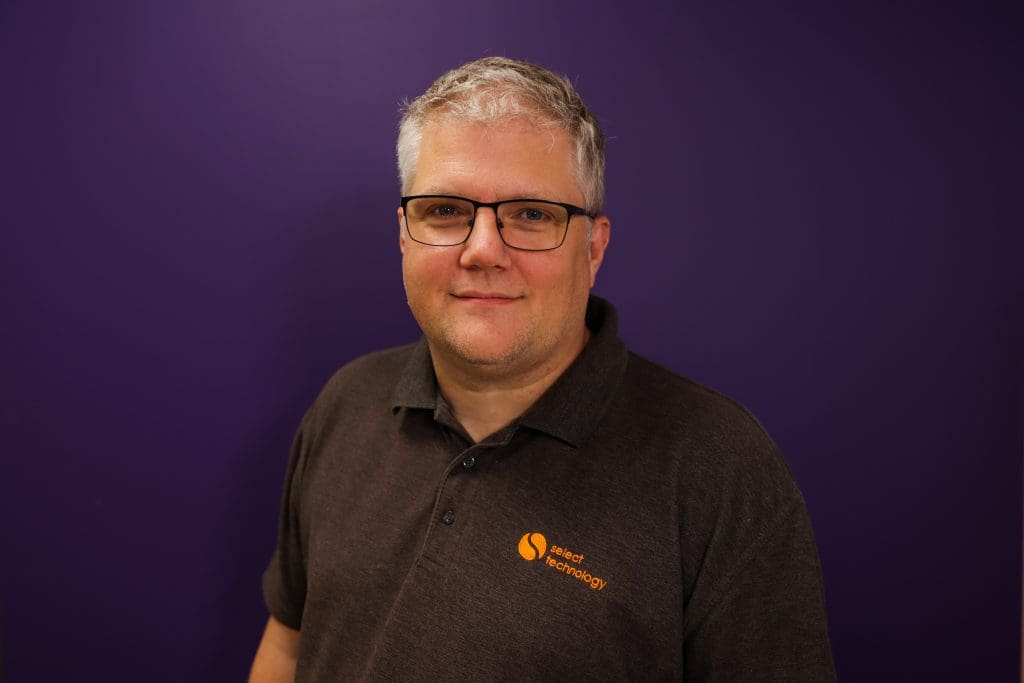
Nick Ellis
AI and Innovation Lead
Nick Ellis is the AI and Innovation Lead at Select Technology. He is the driving force behind our Future Workplace service, which enables SMEs across all industries to use AI and automation to enhance business operations
Throughout his career he has been instrumental in helping organisations across London and the South East, to unlock the power of AI and automation to build smarter workflows that remove manual administration and connect systems. He has helped organisations replace inefficient tools with simplified processes, freeing up teams to focus on what they do best and enabling business growth without increasing costs.
With over 30 years’ experience in business technology, spanning FTSE 500 organisations and SMEs, Nick specialises in Microsoft 365, cloud software, AI solutions, and business intelligence.